Showing posts with label Rwanda. Show all posts

Tuesday, 31 August 2010

Thought Black People Had It Tough? Try Being Untouchable.

3 comments
Living in the West, when I hear about discrimination I think of gender, race, religion and even age. One word that doesn't come to mind is caste but for an estimated 250 million people worldwide, caste discrimination is a serious problem. A caste is a combined social system of occupation, endogamy (marriage within a specific ethnic group), culture, social class, and political power. According to UNICEF, discrimination based on caste is prevalent mainly in parts of Asia and Africa.

The Indian caste system is comprised of four different castes, and outcasted social groups. Caste barriers have mostly broken down in large cities, though they persist in rural areas of the country, where 72% of India's population resides. In some rural areas and small towns, the caste system is still very rigid. The Government of India has officially documented castes and sub-castes, primarily to determine those deserving reservation (positive discrimination in education and jobs) through the census. The Indian reservation system, though limited in scope, relies entirely on quotas. The Government lists consist of Scheduled Castes, Scheduled Tribes and Other Backward Classes.The caste-based reservations in India have led to widespread protests, such as the 2006 Indian anti-reservation protests, with many complaining of reverse discrimination against the forward castes (the castes that do not qualify for the reservation). Many view negative treatment of forward castes as socially divisive and equally wrong.

Independent India has witnessed a considerable amount of violence and hate crimes motivated by caste. Various incidents of violence against Dalits have been reported from many parts of India. Dalit is a self-designation for a group of people traditionally regarded as of lower class and unsuitable for making personal relationships. Dalits are a mixed population of numerous caste groups all over South Asia, and speak various languages.According to a report by Human Rights Watch, "Dalits and indigenous peoples (known as Scheduled Tribes or adivasis) continue to face discrimination, exclusion, and acts of communal violence. Laws and policies adopted by the Indian government provide a strong basis for protection, but are not being faithfully implemented by local authorities."

What disturbed me most when I was researching the violence against Dalits in India was the number of massacres, the latest one being the Kherlanji massacre in 2006. On September 29, 2006, four members of the Bhotmange family belonging to the Dalit underclass were slaughtered in Kherlanji, a small village in Bhandara district of Maharashtra. The women of the family, Surekha and Priyanka, were paraded naked in public then allegedly gang-raped before being murdered. Although initially ascribed by the media and by the Human Rights Watch to upper castes, the criminal act was actually carried out by Kunbi caste (classified as Other Backward Classes by Government of India) farmers for having opposed the requisition of the Dalit land to have a road built over it.
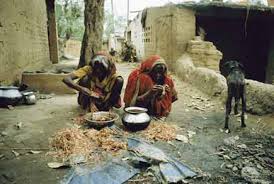

The Nepalese caste system, like the Indian caste system, is highly complex and continues the traditional system of social stratification of Nepal. The castes of Nepal have been placed into 5 hierarchies with the following order of precedence:
  • Thagadhari, (Wearer of holy cord)
  • Matwali
  • Namasyane Matwali (Non-enslavable alcohol-drinkers)
  • Masyane Matwali (Enslavable alcohol drinkers)
  • Pani nachalne choichoto halnu naparne, (Impure but touchable castes)
  • Pani nachalne chiochoti halnu parne, (Impure and Untouchable castes)
The supreme caste communities make ornaments, weapons pottery and others. The castes have different names: Kamis (Iron-smiths), Sunars (Gold-smiths), Lohars (Iron smiths), Vishwakarmas (V.K.), Sobh, Snehi Nepali, etc. They have been named after the professions they are found to be engaged in. For instance, one who is engaged in works related to gold is a Sonar; one who constructs a house or makes pots is an Od; the person who makes things out of copper is a Tamta.

However, Nepalese society is clearly split into touchables and untouchables as touchables have no marital relation with them, and do not allow them to enter their houses. The situation of caste-based untouchability existing in the country depends heavily on what region of the country you are in. Untouchability exists in its extreme form especially in the hills and mountains of the remote western region. Untouchable castes have been prohibited from their entrance into temples and other public places. For instance, the untouchables are not allowed to enter the fair held annually at Dehimandau in Baitadi district and open stalls. They have to sit outside restaurants and wash eating utensils. At many places there also exists the practice of sprinkling water for purification. Milk and milk products are not given to the untouchables to drink and eat.Untouchable boys and girls are discriminated even at public schools. They have to use separate pots for drinking water. They have also to sit separately in the class as ink is defiled with their touch.

With the advent of democracy in 1950, social discriminations started breaking down not because of any legal provisions but because of the high caste people's own initiatives. However, even this change could not abolish untouchability. Though public places were opened to low caste people in some places, the situation remained unchanged to a large extent. There has been made a legal sanction in the civil code against untouchability; however, it has turned out to be meaningless since its violation is not liable to any specific penalty.

In West Africa, the Osu caste system in Nigeria and southern Cameroon, can be traced back to an indigenous religious belief system, practiced within the Igbo nation. It is the belief of many Igbo traditionalists that the Osus are people historically owned by deities, and are therefore considered to be a 'living sacrifice', an outcaste, untouchable and sub-human. People regarded as modern-day Osu in Igboland are descendants of individuals who volunteered and were sacrificed to the various gods. These fore-fathers pledged themselves and their descendants to these gods. They enjoyed protection and privileges but were segregated from ordinary people. Osu people married, fraternized and socialized among themselves. This practice continues to this day. An ordinary Igbo person would not marry or permit any of his relations to marry an Osu person. In the few instances where this has happened, the non-Osu who married the Osu became infested and was from then on regarded as Osu.

The East African caste system in Rwanda, Burundi and eastern Congo it is known as ubuhake. The Tutsi, who comprise about 15% of the population of these areas were the ruling, Cattle-owning caste. Below them were the Hutu, the farmers who made up about 80% of the population. Fewer than 3% of the population are Twa or Pygmies. During the German authorative control over Rwanda and Burundi, the authorities reinforced the system by employing Tutsis in hegemonic (dominating, leaders) roles. The Belgian colonialists who succeeded them after World War I continued this policy, instituting 'ethnic' identity cards. After independence, tensions intensified. In 1972, Tutsis were responsible for a wholesale massacre of Hutus. In the 1990s, Hutus responded with counter-massacres. See our posts on the Rwandan Genocide to find out more (in the posts for Rwanda under 'around the world...').

While many of the discrimination towards 'untouchables' and other 'low' castes is similar to the discrimination of ethnic minorities under white people in the west, the disturbing difference is that the discrimination against so-called 'untouchables' IS STILL HAPPENING. Imagine it. Martin Luther King's dream never happened. Equality never happened. There are still signs outside shops saying "No Dogs, No Negroes". For that to still exist in the 21st century would be unacceptable and unthinkable so why is it any different for castes? I personally think a lot of it is ignorance. We simply don't know what's going on. Even I am guilty. I had heard the term 'untouchable' many times but, never knowing what it was, assumed it was an insulting name for people with leprosy or something like that. I knew a lot about the Rwandan genocide but never realised that it wasn't just a one-off situation. This post only contains a raindrop of the ocean of countries across the globe with castes and caste systems.

It can be easy to shrug and say 'what can we do?' but something CAN be done. There have been many countries like Korea, Hawai, Japan, Spanish America and England that used to have castes systems and don't any longer. There are also countries like Bali that have castes systems but there are no 'untouchables' and there is mobility within the castes so one family can contain many castes and they can marry one another. This discrimination is wrong and the first step to beating it is telling everyone its out there, its wrong and we aren't going to accept it. Tell some friends, work with the charities and touch an untouchable.

Information from:

Friday, 14 May 2010

The Apprentice Adviser's Rwandan Mission

0 comments

Nick Hewer is well recognised in the UK as Lord Alan Sugar's adviser in the reality television show The Apprentice but, increasingly important to him, he is also patron for the Hopes & Homes for Children charity.

The charity helps with housing and healthcare for vulnerable children and their families in 10 Eastern European and African countries. "They're essentially ensuring that children grow up in a family environment, but in Rwanda particularly that they're taken out of malnutrition and grow up to be healthy kids - thats the core objective" says Hewer.

In Rwanda, 20% of children die before the age of 5 from malnutrition, malaria and HIV/AIDS, mainly malnutrition. While in Rwanda, Hewer visited one of the 3 'hubs' which treats over 1400 people. These 'hubs' were built to provide shelter, clean water, food and healthcare for children and vulnerable families. "They get a free healthy meal, sex education, inoculations, HIV testing, the weighing and the follow-through with the children so they come back again and again, so they're brought back up to proper weight levels".

Self-help is also part of the project as families are encouraged to keep rabbits as a low-cost source of protein and there are small 'micro' loans to encourage enterprise in the most difficult of circumstances. "I saw one young kid, he was 14, he looked about eight because he was so malnourished, he was tiny. He was sleeping in the corner of a mud hut that is about the size of a potting shed without anything in it. He's now clothed and back in school, but critically, they gave him £20 so he could start a peanut business, roasting them in his little hut and selling them in the market. That little kid can now afford to feed himself, clothe himself and pay his school fees... and suddenly he's a little businessman. Wonderful."

Nick Hewer said "I took away with me the memory of a very inhibited population. They went through the most terrible time, a million people killed in 100 days. I know it was back in 1994 but its still a repressed population. I also got the impression of a country that are really going t0 fight their way through."

This is rewritten from a BBC article (click here) about how high-profile names can help raise awareness of a disease or condition, and bring it under the spotlight. Their video series talks to those in the public eye about their personal reasons for speaking out.

Wednesday, 7 April 2010

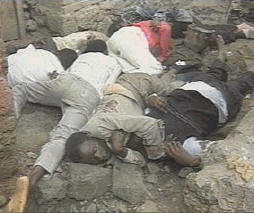
Pictures from the Rwandan Genocide

0 comments


Pictures from:

Hotel Rwanda: the Genocide in film

0 comments
Hotel Rwanda is a 2004 historical drama film about the Rwandan genocide. It stars Don Cheadle and Sophie Okonedo and tells the story of one of the heroes of the Genocide, Paul Rusesabagina who acts to save the lives of his family and more than a thousand other refugees, by granting them shelter in the besieged Hôtel des Mille Collines. The video shows clips and gives a synopsis for the film. We recommend this film to all.

Key figures in the Rwandan Genocide

0 comments
Juvénal Habyarimana

Juvénal Habyarimana (March 8, 1937 – April 6, 1994) was President of the Republic of Rwanda from 1973 until 1994. During his 20-year dictatorship he favored his own ethnic group, the Hutus, and supported the Hutu majority in neighboring Burundi against the Tutsi government. On April 6, 1994, he was killed when his airplane, also carrying the President of Burundi, Cyprien Ntaryamira, was shot down close to Kigali International Airport. His assassination ignited ethnic tensions in the region and helped spark the Rwandan Genocide.

Jean Kambanda

Jean Kambanda (born October 19, 1955) was the Prime Minister in the caretaker government of Rwanda from the start of the 1994 Rwandan Genocide. He is the only head of government to plead guilty to genocide, in the first group of such convictions since the Convention on the Prevention and Punishment of the Crime of Genocide came into effect in 1951.

Théoneste Bagosora

Colonel Théoneste Bagosora (born August 16, 1941) is a former Rwandan military officer. He is chiefly known for his role in the 1994 Rwandan Genocide.Bagosora was responsible for establishing paramilitary ‘self-defense’ units, the Interahamwe, that would operate in every commune in the country. These groups were to act in concert with the local police, militias, and military authorities. Bagosora was also responsible for distributing arms and machetes throughout Rwanda.

Augustin Bizimungu

Augustin Bizimungu (born 28 August 1952) is a former general in the Rwandan Armed Forces (FAR). In 1994, he briefly served as chief of staff of the army. During this time, he trained the soldiers and guerrillas who carried out the Rwandan Genocide.

Cyprien Ntaryamira

Cyprien Ntaryamira (6 March 1955 - 6 April 1994), was President of Burundi from 5 February 1994 until his death when his plane was shot down on 6 April 1994. The deaths touched off the Rwandan Genocide.

Faustin Twagiramungu

Faustin Twagiramungu (born 1945 in Cyangugu province) is an ethnic Hutu politician in Rwanda. He was prime minister from 1994 until his resignation in 1995, the first head of government appointed after the Rwandese Patriotic Front captured Kigali. He then exiled himself to Belgium for nearly a decade.

Bernard Ntuyahaga

Major Bernard Ntuyahaga, Rwandan Armed Forces, (probably born in 1952) was convicted by a Belgian court in the murders of ten United Nations peacekeepers at the start of the Rwandan Genocide.

Pierantonio Costa

Pierantonio Costa (1939 - living) is an Italian businessman, diplomat and a rescuer of many lives during the Rwandan genocide.During the Rwandan genocide, Pierantonio Costa was the Italian Consul in Kigali. From 6 April to 21 July 1994, Costa first saved Italians and Westerners, then he moved to his brother's property in Burundi and from there he travelled a lot across Rwanda in an unfaltering effort to rescue the people. For this purpose he used his diplomatic role, his network of frienships and acquaintances and his own money (more than 3 million dollars) to get exit permits for those who asked him for help.By the end of the genocide he had rescued 2,000 people, including 375 children. He was awarded a gold medal for civil value by the Italian government and received a similar decoration from the Belgian authorities. This is how he described his deeds: “In the midst of so much violence and suffering, I just did what I had to do. That’s all”.

Antonia Locatelli

Antonia Locatelli (1938-1992) had been an Italian volunteer in Rwanda since 1972. In 1992 she eyewitnessed the massacres of the Tutsis taking place in the Bugesera region, South of Kigali, soon after a radio had incited to manhunting. She tried to save 300-400 Tutsis, and thus phoned up the Belgian embassy, RF1 Radio and the BBC. She was murdered the day afterwards by a group of interahamwe militians who had arrived from Kigali specifically for the purpose. She nonetheless had managed to inform the world.

Jacqueline Mukansonera

Jacqueline Mukansonera (born 1963) is an ethnic Hutu from Rwanda who didn't hesitate to save Tutsi Yolande Mukagasana from genocide in 1994. Yolande turned to her at the hospital where she worked as a nurse. She was one of the first targets of the Hutu violence because she was seen as a member of the Tutsi intelligentsia. Jacqueline Mukansonera concealed her in her kitchen for 11 days. The two women didn't speak to each other during those days out of fear of discovery. Jacqueline meanwhile bribed a policeman and provided her guest with false Hutu documents. Jacqueline risked her life to save Yolande, thus proving that there is room for personal responsibility even in the midst of the most awful and extreme violence.

Paul Rusesabagina

Paul Rusesabagina (born June 15, 1954) is a Rwandan who has been internationally honoured for saving 1,268 refugees during the Rwandan Genocide. He was the assistant manager of the Sabena Hôtel des Mille Collines before he became the manager of the Hôtel des Diplomates, both in Kigali, Rwanda. During the 1994 Rwandan genocide, Rusesabagina used his influence and connections as temporary manager of the 'Mille Collines' to shelter 1,268 Tutsis and moderate Hutus from being slaughtered by the Interahamwe militia.Rusesabagina's efforts were the basis of the Academy Award nominated film Hotel Rwanda (2004).

Carl Wilkens

Carl Wilkens (1957—) is the Director of World Outside My Shoes. He is the former head of the Adventist Development and Relief Agency International in Rwanda. In 1994, he was the only one out of 257 Americans who chose to remain in the country after the genocide began.The first three weeks were spent in his house, but when there was a possibility to go out and do anything to people, who were slaughtered every day, sometimes just meters away, he gave his all to help them. It was Wilkens who saved about 400 people from Gisimba Orphanage.Vatier Orphanage and Nyamirambo Adventist Church was run by a Frenchman, Mark Vatier, and before April 1994 its main goal was to take care of 16 HIV-positive orphans. But during the genocide it was a hiding place for about 100 children. They did not have drinking water and were running out of food and it was just then that Wilkens appeared, bringing most needed supplies. None of the children spoke English nor did Carl speak Kinyarwanda, so at first children who did not know his name called him: ADRA SOS (it was written on his car). When the situation became critical (there was fighting going on between RPF and Hutu army in the area where orphanage was situated), again Wilkens tried to relocate survivors to Saint Michel Cathedral. His obstinacy allowed him to do it once again. People from the orphanage were safe. He did the same for 12 survivors from Adventist Church in Nyamirambo. They were transported to the safe haven in Hôtel des Mille Collines. When the units of Rwandan Patriotic Front took over Kigali on June 4, 1994, it was not still the end of service for Wilkens. Asked by RPF's officials, he helped distributing water, food and supplies for Kiaglis inhabitants.

Information taken from:
http://en.wikipedia.org/wiki/Faustin_Twagiramungu
http://en.wikipedia.org/wiki/Bernard_Ntuyahaga
http://en.wikipedia.org/wiki/Pierantonio_Costa
http://en.wikipedia.org/wiki/Antonia_Locatelli
http://en.wikipedia.org/wiki/Jacqueline_Mukansonera
http://en.wikipedia.org/wiki/Paul_Rusesabagina
http://en.wikipedia.org/wiki/Carl_Wilkens

Today's Celebrations April 7th!

0 comments
Today is...

Day of Beauty & Mother's in Armenia
National Mourning Day (Genocide Remembrance Day) in Rwanda
Toussaint L'Ouverture Day in Haiti
Women's Day in Mozambique
World Health Day All Over the World

Memorial Day of the Rwandan Genocide

0 comments
Today is the Memorial Day for the Rwandan Genocide, an event which we at Breaking perceptions consider to be of enormous significance and so have decided to dedicate today's posts to educating our perceivers on why this day is so important.
Photobucket