Showing posts with label Africa. Show all posts

Thursday, 2 September 2010

Neither Black nor White - The Confusion of Being Mixed Race

0 comments
In today's world, our race or ethnicity has an enormous effect on our personal identity. Races have histories, celebrations, countries of origin, cuisines, music styles and more. Mixed race, or biracial people have ancestries which come from different races. Technically, we are all multiracial as people boast of being "1/3 Italian, 1/5 French with a Grandma from Scotland" but the term mixed race/biracial refers to those with parents from two different races.

As racism declines and globalism increases, it is inevitable that the number of mixed race people around the world continues to grow. It is still, however, uncommon. In 2006, biracial people made up 2% of the United States population, 1.5% of the Canadian population. In 2005 in the UK, 3.4% of newborn babies were mixed race and by 2020 the mixed race population is expected to be Britain's largest ethnic minority group with the highest growth rate. There is an estimated population of Anglo-Indians is 600,000, with the majority living in Britain and India. 2.4% of the 2007 Singapore population were mixed race. Although the most common mixed ethnicity is some form of black and white, the combinations are endless as the different kinds of races are endless.

Even though being from two different races means you have two different cultures to enjoy, the difficulty comes from the fact that technically, you are neither of those two races either. In a sense, mixed race people are born with a completely blank slate and they can create their own identities. Take me, Robyn, for example. My mother is black Caribbean and my father is white British. While my skin is brown, I am not black but neither am I white. I am both and yet neither and this fact is dealt with differently by each mixed race individual.

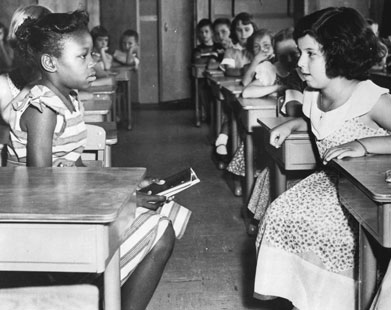
I have never connected myself with either the white or black cultures and my race has never even really been an important factor to me. I've always found that its other people who are more concerned about my race. 50% of the time people ask me "where are you from?" and, although I always know what they mean, I like to reply "Harrow" or "London" so they then ask "no, I mean like what country originally?" Then I explain my two different parents. The other 50% like to take a guess and BOY have there been some guesses. I've been mistaken for Indian, Greek, Middle Eastern, Native American, all of the Caribbean islands and just about all of the countries in South America. The only trouble I've ever found with being mixed race is when I am unable to fit in because I'm not a certain race. All over the world there are people who only hang out with and date those of their own race. One such experience when I was a teenager was when my Indian best friend ditched me to join a group of Indian girls just like her. I couldn't appreciate or join in the Indian culture and it must have gotten tiresome for her. Losing a friend because I was mixed race was difficult to accept but for every Ying there is a Yang: there are many men in this world who specifically find mixed race girls HOT. Don't know what it is, but they do! And I have never again found any trouble with my friends and have friends of all different races from all over the world. I also only take my race seriously when I get called Half-caste, the word I hate most in the whole world. I am NOT half of anything. Because mixed race people are so uncommon and the term half-caste has never been widely recognised as a racist term, people often use it in a completely neutral manner, not realising how offensive it can be. Think of it this way: the term "coloured" for black people isn't widely recognised as racist as such, but if a black person got called that, odds are they would be offended and think "I'm not a frigging paint by numbers."

There are also a high number of mixed race celebrities in this world and fame doesn't prevent them having their own mixed race experiences.

Halle Belle recently told Lesley O’Toole how her White Liverpudlian mother Judith met her Black GI father Jerome, when he was stationed in England. She moved to America to marry him and they settled in Cleveland, Ohio. Initially, Berry’s parents lived in a black neighbourhood until Halle was four. However around this time they separated and Halle’s mother moved her and her sister Heidi to a white neighbourhood. 'When we lived in the black neighbourhood, we weren’t liked because my mother was white. In the white neighbourhood, they didn’t like me because I was black. That was the beginning of my trying to be what I thought people wanted to be.'

In this excerpt from her autobiography, Catch A Fire, Melanie Brown (Scary Spice from the Spice Girls) tells the world her thoughts on mixed-race. 'I was lucky that my parents were so cool about race when I was growing up. They respected each other's cultures and mixed them and were happy about it, which was rare. They taught me always to respect both Black and White people. I've since noticed that Mixed-Race kids can get really confused if there parents sway one way or the other and are prejudiced against White or Black, because they become alienated from one side or the other. It's difficult because you've got your Black communities and you've got your White communities. There are Black churches, White churches, Jewish, Buddhist, Muslim and other places of worship, but you don't get anything officially for Mixed-Race people. I'm not saying that being Mixed-Race is a defined culture and has a history - well, it has got a history but it's been taboo for a long time, because society has always been so divided. For centuries, Mixed-Race children were mainly associated with being products of rape, the result of forced encounters between masters and slaves on plantations. They were ignored, their existence swept under the carpet and they were part of a forgotten history. Things have changed now. We're starting to mix more and you get people who are quarter this, a half that and a quarter something else, which is great. The only problem is that there are a lot of kids growing up who don't feel they belong anywhere. Their identity isn't black or white. I had problems knowing where I fitted in sometimes. I had Black friends and I also had White friends and some of my Black friends would be completely on the Black side dissing the Whites, while some of my White friends were completely on the White side and didn't really know anything about the history of Black culture. They had no idea about all the suffering that had gone on. I was different to the other Mixed-Race kids at school because I never chose one side over the other. I got on with everyone and as a result I was called 'Bounty' - Black on the outside, White on the inside. I remember thinking, Why are they calling me that? My parents had Black friends and White friends and I spent time with my mum's family and my dad's family, so my life was properly mixed, even down to the music I heard at home - from Aswad to the Eurythmics’

John Conteh was born in Toxteth, Liverpool, to a Sierra Leone father and an Anglo-Irish mother. Frequently in trouble as a teenager, his father steered him towards boxing. On March 13th 1973, at the age of just 21, he won the European light heavy-weight title. He went on to win a string of titles including the WBC Light heavyweight title. John said in his autobiography, ‘My first realisation that I was different from my white mates came when I was making sand castles from some builders materials in the road, that’s how young I was.A drunk loomed over me and began kicking my castles over and called me some frightening names. The one that struck the most fearful chord in my child’s brain was half caste.I remember running indoors to my mother and demanding some kind of explanation. When she told the old man about it that night, he roared like a lion, shouting: ‘My children are not half of anything. They are full human beings.’

For footballer Curtis Davies it is important that people acknolwedge all of his racial identity.'I'm as much white as I am black,' he says. 'People have got to acknowledge that. My mum is white and I don't want people to discount that.' Curtis has an older half-brother who is white. 'Every time we went to football people couldn't believe we were brothers,' he says. 'They couldn't take that I could be related to a white person.' For Curtis Davies having a fluid identity can also raise difficult questions. 'If I'm walking down the street with black mates, it's cold and we've got our hoodies up, we are likely to get name-checked by the police. I've been with my white mates, same area, same hoodies and it's never happened. The police don't even look or slow down. I guess that's another aspect about the split in my race,' he says. Curtis is aghast at the idea of having to choose. 'Choosing which room to go into?' he says. 'That's like choosing who to save from a burning building, your mum or your dad.'

Manchester United's Welsh International winger Ryan Giggs gave a remarkably frank interview in the French weekly L'Eqipe Magazine, when he publicly acknowledged his black heritage. 'Most people do not know that my origins are African-Welsh, in fact only the people who are close to me and who count for me know my whole story. Looking at me from the outside, it is not very obvious, I know but half my family is black and I feel close to their culture and their colour. I am proud of my black roots and of the black blood that runs in my veins. I do not wish to hide my origins, nor do I seek to make it a subject of conversation. I am what I am.'

Growing up surrounded by white faces in Welwyn Garden City in Hertfordshire, English footballer David James was the only non-white child at his junior school. 'I was called a coon and a black bastard,' he says. 'I lived with my white mum so I couldn't go back to an ethnic home and relate the experience. At school I was asked if I was adopted. I got confused and I'd go home and ask my mum if I was divorced.' David believes that there was a direct correlation between bullying because of his mixed-race background and his low self-esteem. 'Trying to break records in goal was all about proving that I was valuable.' David also had a problem with the term half caste saying:'Being described in fractions is like being seen as abstract parts. It was a subtle prejudice that I felt,' he says, 'but people always commented on pieces of me - my hair, my colour - no one ever said anything nice about the whole of me.'

Crystal Palace winger Jobi McAnuff grew up in north London with his Jamaican father and English mother. Jobi celebrates his fluid identity, but he admits that in football there are racial cliques. 'From my experience I get seen as one of the ‘brothers’. You walk into the canteen and there's a table of black boys and the white boys are up the other end, but I don't see it as a negative. I'd like to think it's easier for me to cross between groups, but my white friends at Palace still see me as black. People only see skin deep and society says I look more black than white.'

Actress Thandie Newton tells interviewers that one of her fondest memories is watching her mother get dressed in her traditional African garb because it taught her black pride. 'It's funny, but yes. I was recently talking to my brother about what it means to be black, and he gave me a quizzical look, as if to say, 'Hey, this is a bit radical,' because I was taking a very black stance. But he reminded me of how I used to feel- as neither white nor black, but as a bridge between both. Now I see myself as black. There is a side of me that would like to go back to how I used to feel. But then I was looking at my peers. Now I'm looking at the whole world.'

Lead singer of the Pussycat Dolls Nicole Scherzinger was born in Hawaii, her father is Filipino and her mother is Hawaiian and Russian but Nicole has had many people confuse her racial identity. 'I’m Filipino-Russian-Hawaiian,' she says, 'but people think I’m from Pakistan.' She may be a household name now but Nicole remembers how difficult it was as a mixed-race girl when she was first entering the entertainment industry. 'A lot of people didn’t understand what my nationality was or what race I was. So, they were a little confused on how to cast me or what my place was. It was really confusing at first because people wanted me to be like the Puerto Rican girl, the sidekick, the Puerto Rican best friend. I’m like, I’m not Puerto Rican.'

England women's striker Rachel Yankey grew up in west London with an English mother; her Ghanaian father did not live with them. Sometimes it is the small things about a mixed-race background that make the most impression. 'I've been in a shop with my mum and they've looked at both of us and gone, 'I can see you're related', and I'm thinking, 'Why say that?' Or hairdressers, that's the most common one. I remember going to white hairdressers with my mum and they couldn't cut it right, or they put the wrong products in.' Rachel says she feels uncomfortable when people assume things about her because of how she looks. She tells the story of an African mother to a child who attends her coaching sessions. 'She brought in some traditional African food for me and asked if I knew what it was. She wasn't quizzing me, but I felt that being half-African I should know. It bothered me that I didn't. I felt I had to explain. I said that my dad didn't bring me up, I didn't grow up eating African food.' Rachel also says her feelings differ according to the colour of the people in the room. 'When you go in the white room you know you're different looking, but I've grown up with white people so that's probably where I'd feel most comfortable. When you go in the black room you look similar but you don't feel as comfortable inside. I'm happiest when I'm surrounded by a mix of people.'


In a forum on what it is like being mixed race, there were many different responses:

AutoMango: No different to being any other race really. in all of primary school there was just me and a black boy who were anything. there were half german twins but they're still white. i think at that age and a bit older people think if your not white then you're black, which of course im not-im neither, so you get the odd childish comments. "have you been painting with black paint today?"

Kiero: Being mixed race is all about having other people arguing about your identity, and the supposed "crisis" you suffer. Along with being labelled a "coconut" if you're well-educated and articulate.

osg_2: being mixed is a different experiencce still becos lots of ppl think ur confused or in sum way special, iv had lots of ppl sayin 2 me i wish i was mixed-race. But a bad thing is dat alot of (black) people think that mixed-race ppl thinkk there 2 nyc an r skets/slags/hoes/easy. I dnt lyk dese views

korlebu: Good points - I genuinely support France, Ghana and England in major tournaments as they have made me the individual I am
- I have the social and interpersonal skills to adapt into black or white environments (and other environments for that matter)
- My white side (mother) has done what my black side (father) was unfortunate enough not to do. Send myself and 4 other sibblings to top schools and university (cambridge etc). (Father well educated in Ghana but could only get a job as postman in UK)
- Have inherited stronger physical attributes from black side as have my 4 other sibblings (some may argue this, but science will argue my point)
- I represent how far black and white culture have come from our darkest days
- On a lighter note, sooooo many girls (especially black girls) want to have my children! Seriously, I have a queue.
Bad points
- When we lived in Ghana, we were called 'obroni' - white people by the black mainstream. When we came to UK, we were called black by the white mainstream.
- Black people see you as cousins or outcasts and white people see you quite simply as black or are so uneducated on the matter that they think mixed is just black but a different shade.
- Despite most mixed race (including myself) people saying to themselves that they are neither black or white but individuals, the truth is that since the caveman days we have always sought a group in society to belong to and as long as mixed race are not recognised on a more 'official' basis as whites and blacks are the question will always remain

Milk Maroon: Well being mixed race, it's generally having your parents from two very different ethnical and/or cultural background. Sometimes you have to deal with the issues it can generate, sometimes you're lucky enough to get to know both parts and cultures you're made of.
Generally, I believe we're more a product of our environment. That's why you can "look black" but not relate to Blacks... There are numerous of examples, this one is one among many.

BenS: I was never told I was any race as an infant, I always knew I was mixed so in general my me being mixed isn't an issue because I'm just me. What I dislike is the perception people have of mixed race people. Things like if a mixed race person has a white mother, then the perception is she must ugly, fat, working class etc. If a mixed race person has a white parent, he must also be ugly, but also a wimp. I also dislike the fact mixed race people are in general viewed as having identity issues, and that a well grounded mixed race person see's themselves as black. And that mixed race people who are brought up by a single white parent, think they are white, and are somehow racist towards black people. The sad thing is these racist stereotypes are mainly things black people wish to be true. I would say these are the general stereotypes of what it's supposed to be like to be mixed race. They only stereotype I fit is that from the age of 4yrs old I didn't grow up with my black father, so the stereotype of growing up with a single white mother (though a very beautiful and middle class one) is true for me. But from my own experience, I me being mixed race isn't an issue unless I'm around black people who have these "what are you" attitude which which I find very offensive. Though it's wrong to presume every black person has that attitude. The black and white view of mixed race people as a whole I guess is from what I read online and tv documentaries etc is, that white people don't wish to admit we are part of their "pure" culture. And that black people want to control use and have use deny our European side.

Born to a Nigerian father and White mother, Sir Keith Ajegbo is a key figure in education in Britain, as a former headmaster and author of the report to the Secretary of State for Education and Science on diversity and citizenship within the school curriculum. In a post for the Mixedness & Mixing website which gives new perspectives on mixed-race Britons, he said "The spectrum of being mixed race is extremely wide. It is dependent on the particular racial mix, on location and a range of other factors. However a very crucial component to mixed race children belonging and feeling whole has to be the attitude of their parents. My unresearched observation is that if parents are sensitive to their child being mixed race and are prepared to work together on the issues that might arise in terms of identity and belonging then this makes a considerable difference. I expect it also makes a difference if the family is together and both races are part of that family experience. The biggest psychological issue for me was being part of a white family with very little contact with the black side of my family. While my white family were very good to me they treated me as if I was white but had, rather accidentally, black skin. My grandmother would never allow black people into her house because of the trouble caused by my mother's marriage. I remember my mother telling me to pull my cap on so people couldn't see my hair and crying when my aunt referred to my curly hair. As a result I have always felt an element of being outside both races and of being inauthentic. There are geographical contexts. It is probably easier to be mixed race in London, which is increasingly multi cultural, than Bradford and other cities where Trevor Phillips has talked of the country 'sleepwalking to segregation.' Nor is it easy to be 'the only black in the village'. One way in which being mixed race has determined my life is that I couldn't move out of London because I imagine I would not feel comfortable. It is also true that the nature of a person's mixedness make a difference. There are different issues for children of mixed African Caribbean or African and white heritage which is quite common in some urban areas to children of Asian/white heritage. Class makes a difference. A purely personal observation is seeing working class mixed race pupils moving towards black youth cultures and middle class mixed race pupils moving towards white. In terms of schooling and neighbourhoods working class pupils often come into far greater contact with pupils from other cultures. This is exacerbated by white middle class flight. I have often felt disturbed by TV satires around working class culture that imply a mongrel society. While some aspects of being mixed race are easier as the society becomes more at ease with race and difference, mixed race children are still likely to be at the sharp end of tensions and prejudice. An issue for me, which I expect is still there, is for mixed race children to have to listen to prejudices voiced by one or other of their races against the other one. This can create a real sense of dislocation and being an outsider. One of my great fears as a child, which has recurred through my life, was of a great war between white and black in which I could find no haven on either side."

The media are also paying a lot more attention to the mixed race ethnicity. In a 2006 article for The Guardian newspaper, Laura Smith talked being mixed race: "Aged seven, I had the dubious distinction of being the only girl with one pink and one brown parent at my north London primary school. Although rarely intentionally unkind - apart from the little boy who called me poo in the school playground when the mood took him - my all-white classmates never let me forget that I was not like them. They asked me what it felt like to be black and touched my hair uninvited. In turn, I cut off my curls as gifts to satisfy their curiosity and told them that where my mum came from they cleaned their teeth by chewing on sticks. Nearly 25 years on, much has changed. The last national census counted 680,000 mixed race people, accounting for 1.2% of the overall population and nearly 15% of the ethnic minority population - and that is widely believed to be an underestimate. Suddenly, our image is everywhere, projected on posters selling Marks & Spencer's bikinis or sofas for DFS. Mixed-race people have become the acceptable face of ethnic minorities for advertisers and programme makers. We are sufficiently exotic for viewers and consumers to recognise as "other", and therefore a handy shorthand for diversity without the potential alienation associated with using somebody too black, too different, too dangerous. And yet there is an inconsistency. Despite our growth in numbers and our incredible visibility, we are utterly absent from any public debate on race. We appear to be the elephant in the room: obvious to anybody living in a large British city yet invisible at a government level. Take the current discussion surrounding multiculturalism. The fact that people are increasingly falling in love, or simply in lust, and having children across a so-called racial divide is an inconvenient truth that challenges the government's notion of neat "communities" of black, white or Asian people." [to read the full article, see the links at the bottom of this post]

Being mixed race is very different from other any other race and has both its advantages and disadvantages. I believe however that as this ethnicity grows and becomes more common, eventually being mixed race will become as normal as being Black or Asian or White and perhaps my future mixed race grandchildren will have completely different experiences to myself, just as I have had different experiences to people like Sir Keith Ajegbo who grew up in the 1950s and 60s.

Information from:
Melanie Brown's autobiography Catch A Fire

Tuesday, 31 August 2010

Thought Black People Had It Tough? Try Being Untouchable.

3 comments
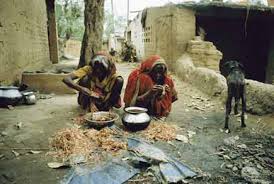
Living in the West, when I hear about discrimination I think of gender, race, religion and even age. One word that doesn't come to mind is caste but for an estimated 250 million people worldwide, caste discrimination is a serious problem. A caste is a combined social system of occupation, endogamy (marriage within a specific ethnic group), culture, social class, and political power. According to UNICEF, discrimination based on caste is prevalent mainly in parts of Asia and Africa.

The Indian caste system is comprised of four different castes, and outcasted social groups. Caste barriers have mostly broken down in large cities, though they persist in rural areas of the country, where 72% of India's population resides. In some rural areas and small towns, the caste system is still very rigid. The Government of India has officially documented castes and sub-castes, primarily to determine those deserving reservation (positive discrimination in education and jobs) through the census. The Indian reservation system, though limited in scope, relies entirely on quotas. The Government lists consist of Scheduled Castes, Scheduled Tribes and Other Backward Classes.The caste-based reservations in India have led to widespread protests, such as the 2006 Indian anti-reservation protests, with many complaining of reverse discrimination against the forward castes (the castes that do not qualify for the reservation). Many view negative treatment of forward castes as socially divisive and equally wrong.

Independent India has witnessed a considerable amount of violence and hate crimes motivated by caste. Various incidents of violence against Dalits have been reported from many parts of India. Dalit is a self-designation for a group of people traditionally regarded as of lower class and unsuitable for making personal relationships. Dalits are a mixed population of numerous caste groups all over South Asia, and speak various languages.According to a report by Human Rights Watch, "Dalits and indigenous peoples (known as Scheduled Tribes or adivasis) continue to face discrimination, exclusion, and acts of communal violence. Laws and policies adopted by the Indian government provide a strong basis for protection, but are not being faithfully implemented by local authorities."

What disturbed me most when I was researching the violence against Dalits in India was the number of massacres, the latest one being the Kherlanji massacre in 2006. On September 29, 2006, four members of the Bhotmange family belonging to the Dalit underclass were slaughtered in Kherlanji, a small village in Bhandara district of Maharashtra. The women of the family, Surekha and Priyanka, were paraded naked in public then allegedly gang-raped before being murdered. Although initially ascribed by the media and by the Human Rights Watch to upper castes, the criminal act was actually carried out by Kunbi caste (classified as Other Backward Classes by Government of India) farmers for having opposed the requisition of the Dalit land to have a road built over it.


The Nepalese caste system, like the Indian caste system, is highly complex and continues the traditional system of social stratification of Nepal. The castes of Nepal have been placed into 5 hierarchies with the following order of precedence:
  • Thagadhari, (Wearer of holy cord)
  • Matwali
  • Namasyane Matwali (Non-enslavable alcohol-drinkers)
  • Masyane Matwali (Enslavable alcohol drinkers)
  • Pani nachalne choichoto halnu naparne, (Impure but touchable castes)
  • Pani nachalne chiochoti halnu parne, (Impure and Untouchable castes)
The supreme caste communities make ornaments, weapons pottery and others. The castes have different names: Kamis (Iron-smiths), Sunars (Gold-smiths), Lohars (Iron smiths), Vishwakarmas (V.K.), Sobh, Snehi Nepali, etc. They have been named after the professions they are found to be engaged in. For instance, one who is engaged in works related to gold is a Sonar; one who constructs a house or makes pots is an Od; the person who makes things out of copper is a Tamta.

However, Nepalese society is clearly split into touchables and untouchables as touchables have no marital relation with them, and do not allow them to enter their houses. The situation of caste-based untouchability existing in the country depends heavily on what region of the country you are in. Untouchability exists in its extreme form especially in the hills and mountains of the remote western region. Untouchable castes have been prohibited from their entrance into temples and other public places. For instance, the untouchables are not allowed to enter the fair held annually at Dehimandau in Baitadi district and open stalls. They have to sit outside restaurants and wash eating utensils. At many places there also exists the practice of sprinkling water for purification. Milk and milk products are not given to the untouchables to drink and eat.Untouchable boys and girls are discriminated even at public schools. They have to use separate pots for drinking water. They have also to sit separately in the class as ink is defiled with their touch.

With the advent of democracy in 1950, social discriminations started breaking down not because of any legal provisions but because of the high caste people's own initiatives. However, even this change could not abolish untouchability. Though public places were opened to low caste people in some places, the situation remained unchanged to a large extent. There has been made a legal sanction in the civil code against untouchability; however, it has turned out to be meaningless since its violation is not liable to any specific penalty.

In West Africa, the Osu caste system in Nigeria and southern Cameroon, can be traced back to an indigenous religious belief system, practiced within the Igbo nation. It is the belief of many Igbo traditionalists that the Osus are people historically owned by deities, and are therefore considered to be a 'living sacrifice', an outcaste, untouchable and sub-human. People regarded as modern-day Osu in Igboland are descendants of individuals who volunteered and were sacrificed to the various gods. These fore-fathers pledged themselves and their descendants to these gods. They enjoyed protection and privileges but were segregated from ordinary people. Osu people married, fraternized and socialized among themselves. This practice continues to this day. An ordinary Igbo person would not marry or permit any of his relations to marry an Osu person. In the few instances where this has happened, the non-Osu who married the Osu became infested and was from then on regarded as Osu.

The East African caste system in Rwanda, Burundi and eastern Congo it is known as ubuhake. The Tutsi, who comprise about 15% of the population of these areas were the ruling, Cattle-owning caste. Below them were the Hutu, the farmers who made up about 80% of the population. Fewer than 3% of the population are Twa or Pygmies. During the German authorative control over Rwanda and Burundi, the authorities reinforced the system by employing Tutsis in hegemonic (dominating, leaders) roles. The Belgian colonialists who succeeded them after World War I continued this policy, instituting 'ethnic' identity cards. After independence, tensions intensified. In 1972, Tutsis were responsible for a wholesale massacre of Hutus. In the 1990s, Hutus responded with counter-massacres. See our posts on the Rwandan Genocide to find out more (in the posts for Rwanda under 'around the world...').

While many of the discrimination towards 'untouchables' and other 'low' castes is similar to the discrimination of ethnic minorities under white people in the west, the disturbing difference is that the discrimination against so-called 'untouchables' IS STILL HAPPENING. Imagine it. Martin Luther King's dream never happened. Equality never happened. There are still signs outside shops saying "No Dogs, No Negroes". For that to still exist in the 21st century would be unacceptable and unthinkable so why is it any different for castes? I personally think a lot of it is ignorance. We simply don't know what's going on. Even I am guilty. I had heard the term 'untouchable' many times but, never knowing what it was, assumed it was an insulting name for people with leprosy or something like that. I knew a lot about the Rwandan genocide but never realised that it wasn't just a one-off situation. This post only contains a raindrop of the ocean of countries across the globe with castes and caste systems.

It can be easy to shrug and say 'what can we do?' but something CAN be done. There have been many countries like Korea, Hawai, Japan, Spanish America and England that used to have castes systems and don't any longer. There are also countries like Bali that have castes systems but there are no 'untouchables' and there is mobility within the castes so one family can contain many castes and they can marry one another. This discrimination is wrong and the first step to beating it is telling everyone its out there, its wrong and we aren't going to accept it. Tell some friends, work with the charities and touch an untouchable.

Information from:

Friday, 28 May 2010

Black Studies

0 comments
Black Studies

Black studies is defined as the study of African-Americans, their culture, and contributions to society. Black studies covers aspect of the institution of slavery and progression of segregation in post-civil war United States. Likewise, the African-Americans had triumphed throughout these perilous times. African-American leaders began to emerge and create movements that would establish a Black identity; some of these movements include the Black Arts Movement, The Nation of Islam, Civil Rights Movement, Black Power Movement, and the Black Nationalist Movement/ Universal Negro Improvement Association.

The Black Nationalist Movement was one of the most groundbreaking movements of Black history. This movement was a political and social movement which promoted the education and political recognition of black Americans.[1] Some people have traced this movement Marcus Garvey’s Universal Negro Improvement Association. This association sought to gain economic power and incorporate blacks into the idea of a community.

Likewise, The Black Nationalist Movement under Gravey’s leadership was primarily based to enhance the life of African-Americans. This movement had two core values which were black pride and racial separatism, ideally Gravey wanted African-Americans completely separate from white society. Judging by what caused these movements they accurately represent responses from a hostile white society. I take reference from a book titled the Production of the Afro-American where it reads “black nationalists maintain that in order for Afro-Americans to liberate themselves from oppression, some degree of autonomy from the dominant society is essential.” Marcus Garvey strongly believed that this separation would allow for blacks to take control of their communities, maintain economic stability, and promote peaceful living environments. [2]

In addition, while looking at the Black Nationalist Movement we must not forget the movement of the Nation of Islam by Malcolm X. This movement was a religious movement that captivated hundreds and thousands of African-Americans, so much that they converted to the religious Islamic practice. During this movement the Nation of Islam taught Muslim beliefs, created black businesses and schools, and rehabilitated former drug addicts into their former functional selves[3]. These participants of this movement were perceived to be the conscious of blacks and ones who would help blacks to achieve some form of success. Many people began to follow this movement because to some it is because of the Nation of Islam that they got their lives back and enjoyed life as they did before drugs.

In contrast, this movement became under fire when the Civil Rights Movement began by Dr. Martin Luther King Jr. The Civil Rights Movement was a movement of protests and political action by thousands of American citizens. The start of such a monumental movement has been attributed to Rosa Parks a woman whom refused to give up her seat on a bus to a white man. This is the spark that had lead to one of the biggest boycotts in American history.[4] These boycotts would lead to certain businesses economic demise since there would not be any protestor’s patronizing their businesses. This movement is known for being a non-violent movement. Police would resort to inhumane methods of crowd control by hosing people down and attacking them with dogs, yet the protestors stood their strong waiting for their voice to be heard.

Lastly, the Black Power movement was a movement started by the Black Panthers. This movement was hailed as the positive force that helped blacks achieve full equality with whites. This movement installed a since of racial pride, self-esteem, and promotion of political participation.[5] The Black Power movement encouraged individuals to instill racial pride and unity. It is from this movement that the Black Art Movement occurred where young black poets, authors, and visual artists found their voices and shared those voices with others. This movement sought out a black audience.

It is through these different movements that the emergence of Black Studies emerged. The objective is to analyze the economic and political reason for slavery in America, provide valuable information regarding blacks and their lives in America. In addition to providing the role of geography plays a role in determining slavery and its effects on the world.

Ancient Kemet played a major role in World History since it established one of the first educational systems the world has ever seen. Egyptian believed that their purpose in life was to live and become a God, this created a society that is heavily based on its divinity. Formal education was one way Egyptians used to attain life’s purpose. Kemet’s scholars taught the Seven Liberal Arts in the Mystery Schools to liberate the person’s soul from its body, which would allow the student to ultimately reach the level of Spiritual Consciousness. Education was to bring out and develop the “good” or “divine” already inside a person. For example, Studying Grammar, Rhetoric and Logic, for example, would remove a person’s “irrational tendencies of behavior” because these subjects were conveyors for moral development. [6]

The legacy of Egypt is debated because it flourished around 3000 B.C. which is inconceivable to those who view Jerusalem as the start of civilization. In addition to this, the idea the Africans began and maintained one of the most advanced civilizations on the planet seems inconceivable. This starts a debate which has lasted hundreds of years .The Kemet tradition naturally belongs to the blacks.[7] We were here before the colonization of Egypt and therefore the land quite naturally belongs to the Africans. During this time the whites came and occupied this land which they exploited for their own goods since it has close proximity to the Nile River.

It is important to study Ancient Egypt and Classical African Civilizations be integrated into African-American studies since it is an ancient civilization in Africa. Egypt should not be taken out of studies because it was originally Kemet which is a part of Africa, there has only been a name change. The contributions of this people and their society should still be noted in African-American studies. This helps in establishing a foundation in African-American studies; it allows us to see exactly what our people had to endure and the hardships that we had to endure. Without doing so the history of African-Americans will remain untold, this creates a perception of partial truths. The complete history of African-Americans should be explored.

The purpose of both of these compromises were to stop the spreading of slavery, although they had similar motives their methods could not be any different. By 1818, the state of Missouri had gained enough population to be entered into the Union. Due to its settlers coming from the South it was expected that Missouri would become a slave state. [8] In 1819, Representative James Tallradge proposed an amendment to ban slavery in Missouri, which is what the South’s economy was based upon. It is through Sen. Henry Clay this compromise was created. The Missouri Compromise stipulated that all the Louisiana Purchase territory north of the southern boundary of Missouri, except Missouri, would be free, and the territory below that line would be slave.

In opposition, the Kansas-Nebraska Act was created. The act was created when Senator Stephen Douglas wanted to build a transcontinental railway which had to pass through the Nebraska. Douglas suggested that the territory become two states, Nebraska entering as a free state and Kansas deciding by popular sovereignty. [9]This nullified the Missouri Compromise entirely however the South agreed. People in the North against the expansion of slavery paid for people to move to Kansas and vote against slavery. This angered the South and resulted in Southerners crossing the border on voting day to vote in for slavery. Violence erupted and a civil war broke out in 'bleeding Kansas'.[10] This can be called the spark of the Civil War since it successfully put the Northerners and the Southerners at war with each other.


[1] Gordon, Dexter. Black Identity: Rhetoric, Ideology, and Nineteenth-Century Black Nationalism (Southern Illinois Univerisity Press, 2003), 37

[2] Gordon, Dexter. Black Identity: Rhetoric, Ideology, and Nineteenth-Century Black Nationalism (Southern Illinois Univerisity Press, 2003), 39

[3]PBS. “The Story of the Movement-The Nation of Islam and Malcolm X”. PBS. http://www.pbs.org/wgbh/amex/eyesontheprize/story/11_noi.html (accessed March 11, 2010)

[4] Levy, Peter. The Civil Rights (London: Greenwood Press Westport, 1998) 127

[5] James McEvoy and Abraham Miller. Black Power and Student Rebellion. (Belmont, CA: Wadsworth Publishing, 1969), 233

[6] Suite101. Ancient Kemet’s World View. Suite 101. http://africanhistory.suite101.com/article.cfm/ancient_kemets_world_view (accessed March 13, 2010)

[7] Henderson, Anthony. Afrocentrism and World Politics: Towards a New Paradigm. (Wesport, CT: Praeger Publishers, 1995), 89

[8] Jones, Charles. Missouri: The Heart of the Nation. (Wheeling, IL: Harlan Davidson Publishing, 2004), 110

[9] Goodrich, Thomas. War to knife: Bleeding Kansas, 1854-1861. (Lincoln, NE: University of Nebraska Press., 2004), 42

[10] Civil War. Secession Crisis. http://civilwar.bluegrass.net/secessioncrisis/200303.html (accessed March 14, 2010)

ftn5[ � p �? � oFootnoteText>[5] James McEvoy and Abraham Miller. Black Power and Student Rebellion. (Belmont, CA: Wadsworth Publishing, 1969), 233

[6] Suite101. Ancient Kemet’s World View. Suite 101. http://africanhistory.suite101.com/article.cfm/ancient_kemets_world_view (accessed March 13, 2010)

[7] Henderson, Anthony. Afrocentrism and World Politics: Towards a New Paradigm. (Wesport, CT: Praeger Publishers, 1995), 89

[8] Jones, Charles. Missouri: The Heart of the Nation. (Wheeling, IL: Harlan Davidson Publishing, 2004), 110

[9] Goodrich, Thomas. War to knife: Bleeding Kansas, 1854-1861. (Lincoln, NE: University of Nebraska Press., 2004), 42

[10] Civil War. Secession Crisis. http://civilwar.bluegrass.net/secessioncrisis/200303.html (accessed March 14, 2010)

Friday, 21 May 2010

Dance around the world: Jazz dance, hip hop dance, Kathak, Funga

0 comments
Jazz Dance

Jazz dance is a classification shared by a broad range of dance styles. Prior to the 1950s, jazz dance referred to dance styles that originated from African American vernacular dance. In the 1950s, a new genre of jazz dance—modern jazz dance—emerged, with roots in Caribbean traditional dance. Every individual style of jazz dance has roots traceable to one of these two distinct origins.


Hip hop Dance

Hip-hop dance refers to social or choreographed dance styles primarily danced to hip-hop music or that have evolved as part of hip-hop culture. This includes a wide range of styles notably breaking, locking, and popping which were developed in the 1970s by Black and Latino Americans. What separates hip-hop dance from other forms of dance is that it is often freestyle in nature and hip-hop dancers frequently engage in battles—formal or informal freestyle dance competitions. Internationally, hip-hop dance has had a particularly strong influence in France and South Korea.


Kathak

Kathak is one of the eight forms of Indian classical dances, originated from northern India. This dance form traces its origins to the nomadic bards of ancient northern India, known as Kathaks, or storytellers. These bards, performing in village squares and temple courtyards, mostly specialized in recounting mythological and moral tales from the scriptures, and embellished their recitals with hand gestures and facial expressions.


Funga

The Funga is a welcome and harvest dance from the Vai people of Liberia. It is made up of two dances brought to the West in the 1930’s and 1940’s by Pearl Primus. It is the "Swan Lake of African Dance" because it is the most widely known and done of the African dances.


Information from:
http://en.wikipedia.org/wiki/Hip-hop_dance
http://library.thinkquest.org/J002266F/africa.htm
http://en.wikipedia.org/wiki/Kathak
http://en.wikipedia.org/wiki/Jazz_dance

Dance around the world: Line Dance, North African Gypsy Dance, Fandango, Bhangra

0 comments
Line Dance

A line dance is choreographed dance with a repeated sequence of steps in which a group of people dance in one or more lines or rows without regard for the gender of the individuals, all facing the same direction, and executing the steps at the same time. Line dancers are not in physical contact with each other. It is most commonly associated with the USA where it is danced to country western music.


North African Gypsy Dance


Fandango

Fandango is a lively folk and Andalusian (flamenco) couple-dance usually in triple metre, traditionally accompanied by guitars and castanets or hand-clapping (palmas in Spanish and Portuguese).Fandango is one of the main folk dances in Portugal.


Bhangra

Bhaṅgṛā is a form of music and dance that originated in the Punjab region of India and Pakistan. Bhangra dance began as a folk dance conducted by Punjabi farmers to celebrate the coming of Vaisakhi, a Punjabi festival. The specific moves of Bhangra reflect the manner in which villagers farmed their land. This musical art further became synthesized after the partition of India, when refugees from different parts of the Punjab shared their folk dances with individuals who resided in the regions they settled in. This hybrid dance became Bhangra. The folk dance has been popularised in the Western World by South Asian communities and is seen in the West as an expression of Indian and Pakistani culture as a whole. Today, Bhangra dance survives in different forms and styles all over the globe – including pop music, film soundtracks, collegiate competitions and even talent shows.


Information from:
http://en.wikipedia.org/wiki/Line_dance
http://en.wikipedia.org/wiki/Fandango
http://en.wikipedia.org/wiki/Bhangra

Friday, 14 May 2010

The Apprentice Adviser's Rwandan Mission

0 comments

Nick Hewer is well recognised in the UK as Lord Alan Sugar's adviser in the reality television show The Apprentice but, increasingly important to him, he is also patron for the Hopes & Homes for Children charity.

The charity helps with housing and healthcare for vulnerable children and their families in 10 Eastern European and African countries. "They're essentially ensuring that children grow up in a family environment, but in Rwanda particularly that they're taken out of malnutrition and grow up to be healthy kids - thats the core objective" says Hewer.

In Rwanda, 20% of children die before the age of 5 from malnutrition, malaria and HIV/AIDS, mainly malnutrition. While in Rwanda, Hewer visited one of the 3 'hubs' which treats over 1400 people. These 'hubs' were built to provide shelter, clean water, food and healthcare for children and vulnerable families. "They get a free healthy meal, sex education, inoculations, HIV testing, the weighing and the follow-through with the children so they come back again and again, so they're brought back up to proper weight levels".

Self-help is also part of the project as families are encouraged to keep rabbits as a low-cost source of protein and there are small 'micro' loans to encourage enterprise in the most difficult of circumstances. "I saw one young kid, he was 14, he looked about eight because he was so malnourished, he was tiny. He was sleeping in the corner of a mud hut that is about the size of a potting shed without anything in it. He's now clothed and back in school, but critically, they gave him £20 so he could start a peanut business, roasting them in his little hut and selling them in the market. That little kid can now afford to feed himself, clothe himself and pay his school fees... and suddenly he's a little businessman. Wonderful."

Nick Hewer said "I took away with me the memory of a very inhibited population. They went through the most terrible time, a million people killed in 100 days. I know it was back in 1994 but its still a repressed population. I also got the impression of a country that are really going t0 fight their way through."

This is rewritten from a BBC article (click here) about how high-profile names can help raise awareness of a disease or condition, and bring it under the spotlight. Their video series talks to those in the public eye about their personal reasons for speaking out.

Wednesday, 7 April 2010

Hotel Rwanda: the Genocide in film

0 comments
Hotel Rwanda is a 2004 historical drama film about the Rwandan genocide. It stars Don Cheadle and Sophie Okonedo and tells the story of one of the heroes of the Genocide, Paul Rusesabagina who acts to save the lives of his family and more than a thousand other refugees, by granting them shelter in the besieged Hôtel des Mille Collines. The video shows clips and gives a synopsis for the film. We recommend this film to all.

Key figures in the Rwandan Genocide

0 comments
Juvénal Habyarimana

Juvénal Habyarimana (March 8, 1937 – April 6, 1994) was President of the Republic of Rwanda from 1973 until 1994. During his 20-year dictatorship he favored his own ethnic group, the Hutus, and supported the Hutu majority in neighboring Burundi against the Tutsi government. On April 6, 1994, he was killed when his airplane, also carrying the President of Burundi, Cyprien Ntaryamira, was shot down close to Kigali International Airport. His assassination ignited ethnic tensions in the region and helped spark the Rwandan Genocide.

Jean Kambanda

Jean Kambanda (born October 19, 1955) was the Prime Minister in the caretaker government of Rwanda from the start of the 1994 Rwandan Genocide. He is the only head of government to plead guilty to genocide, in the first group of such convictions since the Convention on the Prevention and Punishment of the Crime of Genocide came into effect in 1951.

Théoneste Bagosora

Colonel Théoneste Bagosora (born August 16, 1941) is a former Rwandan military officer. He is chiefly known for his role in the 1994 Rwandan Genocide.Bagosora was responsible for establishing paramilitary ‘self-defense’ units, the Interahamwe, that would operate in every commune in the country. These groups were to act in concert with the local police, militias, and military authorities. Bagosora was also responsible for distributing arms and machetes throughout Rwanda.

Augustin Bizimungu

Augustin Bizimungu (born 28 August 1952) is a former general in the Rwandan Armed Forces (FAR). In 1994, he briefly served as chief of staff of the army. During this time, he trained the soldiers and guerrillas who carried out the Rwandan Genocide.

Cyprien Ntaryamira

Cyprien Ntaryamira (6 March 1955 - 6 April 1994), was President of Burundi from 5 February 1994 until his death when his plane was shot down on 6 April 1994. The deaths touched off the Rwandan Genocide.

Faustin Twagiramungu

Faustin Twagiramungu (born 1945 in Cyangugu province) is an ethnic Hutu politician in Rwanda. He was prime minister from 1994 until his resignation in 1995, the first head of government appointed after the Rwandese Patriotic Front captured Kigali. He then exiled himself to Belgium for nearly a decade.

Bernard Ntuyahaga

Major Bernard Ntuyahaga, Rwandan Armed Forces, (probably born in 1952) was convicted by a Belgian court in the murders of ten United Nations peacekeepers at the start of the Rwandan Genocide.

Pierantonio Costa

Pierantonio Costa (1939 - living) is an Italian businessman, diplomat and a rescuer of many lives during the Rwandan genocide.During the Rwandan genocide, Pierantonio Costa was the Italian Consul in Kigali. From 6 April to 21 July 1994, Costa first saved Italians and Westerners, then he moved to his brother's property in Burundi and from there he travelled a lot across Rwanda in an unfaltering effort to rescue the people. For this purpose he used his diplomatic role, his network of frienships and acquaintances and his own money (more than 3 million dollars) to get exit permits for those who asked him for help.By the end of the genocide he had rescued 2,000 people, including 375 children. He was awarded a gold medal for civil value by the Italian government and received a similar decoration from the Belgian authorities. This is how he described his deeds: “In the midst of so much violence and suffering, I just did what I had to do. That’s all”.

Antonia Locatelli

Antonia Locatelli (1938-1992) had been an Italian volunteer in Rwanda since 1972. In 1992 she eyewitnessed the massacres of the Tutsis taking place in the Bugesera region, South of Kigali, soon after a radio had incited to manhunting. She tried to save 300-400 Tutsis, and thus phoned up the Belgian embassy, RF1 Radio and the BBC. She was murdered the day afterwards by a group of interahamwe militians who had arrived from Kigali specifically for the purpose. She nonetheless had managed to inform the world.

Jacqueline Mukansonera

Jacqueline Mukansonera (born 1963) is an ethnic Hutu from Rwanda who didn't hesitate to save Tutsi Yolande Mukagasana from genocide in 1994. Yolande turned to her at the hospital where she worked as a nurse. She was one of the first targets of the Hutu violence because she was seen as a member of the Tutsi intelligentsia. Jacqueline Mukansonera concealed her in her kitchen for 11 days. The two women didn't speak to each other during those days out of fear of discovery. Jacqueline meanwhile bribed a policeman and provided her guest with false Hutu documents. Jacqueline risked her life to save Yolande, thus proving that there is room for personal responsibility even in the midst of the most awful and extreme violence.

Paul Rusesabagina

Paul Rusesabagina (born June 15, 1954) is a Rwandan who has been internationally honoured for saving 1,268 refugees during the Rwandan Genocide. He was the assistant manager of the Sabena Hôtel des Mille Collines before he became the manager of the Hôtel des Diplomates, both in Kigali, Rwanda. During the 1994 Rwandan genocide, Rusesabagina used his influence and connections as temporary manager of the 'Mille Collines' to shelter 1,268 Tutsis and moderate Hutus from being slaughtered by the Interahamwe militia.Rusesabagina's efforts were the basis of the Academy Award nominated film Hotel Rwanda (2004).

Carl Wilkens

Carl Wilkens (1957—) is the Director of World Outside My Shoes. He is the former head of the Adventist Development and Relief Agency International in Rwanda. In 1994, he was the only one out of 257 Americans who chose to remain in the country after the genocide began.The first three weeks were spent in his house, but when there was a possibility to go out and do anything to people, who were slaughtered every day, sometimes just meters away, he gave his all to help them. It was Wilkens who saved about 400 people from Gisimba Orphanage.Vatier Orphanage and Nyamirambo Adventist Church was run by a Frenchman, Mark Vatier, and before April 1994 its main goal was to take care of 16 HIV-positive orphans. But during the genocide it was a hiding place for about 100 children. They did not have drinking water and were running out of food and it was just then that Wilkens appeared, bringing most needed supplies. None of the children spoke English nor did Carl speak Kinyarwanda, so at first children who did not know his name called him: ADRA SOS (it was written on his car). When the situation became critical (there was fighting going on between RPF and Hutu army in the area where orphanage was situated), again Wilkens tried to relocate survivors to Saint Michel Cathedral. His obstinacy allowed him to do it once again. People from the orphanage were safe. He did the same for 12 survivors from Adventist Church in Nyamirambo. They were transported to the safe haven in Hôtel des Mille Collines. When the units of Rwandan Patriotic Front took over Kigali on June 4, 1994, it was not still the end of service for Wilkens. Asked by RPF's officials, he helped distributing water, food and supplies for Kiaglis inhabitants.

Information taken from:
http://en.wikipedia.org/wiki/Faustin_Twagiramungu
http://en.wikipedia.org/wiki/Bernard_Ntuyahaga
http://en.wikipedia.org/wiki/Pierantonio_Costa
http://en.wikipedia.org/wiki/Antonia_Locatelli
http://en.wikipedia.org/wiki/Jacqueline_Mukansonera
http://en.wikipedia.org/wiki/Paul_Rusesabagina
http://en.wikipedia.org/wiki/Carl_Wilkens

About the Rwandan Genocide

0 comments

The Rwandan Genocide was the 1994 mass killing of hundreds of thousands of Rwanda's Tutsis and Hutu political moderates by the Hutu dominated government under the Hutu Power ideology. Over the course of approximately 100 days, from the assassination of Juvénal Habyarimana on April 6 through to mid-July, at least 800,000 people were killed, according to the estimate of Human Rights Watch. Other estimates of the death toll have ranged between 500,000 and 1,000,000, or as much as 20% of the total population of the country. As an ideology, Hutu Power asserted that the Tutsi intended to enslave Hutus and thus must be resisted at all costs. The assassination of Habyarimana in April 1994 was the proximate cause of the mass killings of Tutsis and pro-peace Hutus. They were carried out primarily by two Hutu militias associated with political parties: the Interahamwe and the Impuzamugambi. The genocide was directed by a Hutu power group known as the Akazu. The killing also marked the end of the peace agreement meant to end the war and the Tutsi RPF restarted their offensive, eventually defeating the army and seizing control of the country.

Numerous elite Hutu politicians have been found guilty for the organization of the genocide. The Rwandan Military and Hutu militia groups, notably the Interahamwe, systematically set out to murder all the Tutsis they could capture, irrespective of their age or sex, as well as the political moderates. Hutu civilians were forced to participate in the killings or be shot, and were instructed to kill their Tutsi neighbours. Most nations evacuated their nationals from Kigali and abandoned their embassies in the initial stages of the violence.

National radio, with the exacerbation of the situation, advised people to stay in their homes, and the Hutu power station RTLM broadcast vitriolic propaganda against Tutsis and Hutu moderates. Hundreds of roadblocks were put up by the militia around the country. Lieutenant-General Dallaire and UNAMIR were in Kigali, escorting Tutsis, and were unable to stop the Hutus from escalating their attacks.

On April 9, UN observers witnessed the massacre of children at a Polish church in Gikondo. The same day 1000 heavily armed and trained European troops arrived to escort European civilian personnel out of the country. The troops did not stay to assist UNAMIR. Media coverage picked up on the 9th as the Washington Post reported the execution of Rwandan employees of relief agencies in front of their horrified expatriate colleagues. On April 9–10, US Ambassador Rawson and 250 Americans were evacuated.

Most of the victims were killed in their villages or in towns, often by their neighbors and fellow villagers. Militia members typically murdered their victims by hacking them with machetes, although some army units used rifles. Victims were often found hiding in churches and school buildings, where Hutu gangs massacred them. Ordinary citizens were called on by local officials and government-sponsored radio to kill their neighbors, and those who refused to kill were often murdered themselves. "Either you took part in the massacres or you were massacred yourself."

Several individuals were active in attempting to halt the Rwandan genocide, or to shelter vulnerable Tutsis, as the genocide was being carried out. Among them there are Pierantonio Costa, Antonia Locatelli, Jacqueline Mukansonera, Paul Rusesabagina, Carl Wilkens, and André Sibomana. You can read about these great people in our post on the Key Figures, due out one hour after this post.

In 1998, the International Criminal Tribunal for Rwanda made the landmark decisions that war rape in Rwanda was an element of the crime of genocide. The Trial Chamber held that "sexual assault formed an integral part of the process of destroying the Tutsi ethnic group and that the rape was systematic and had been perpetrated against Tutsi women only, manifesting the specific intent required for those acts to constitute genocide." Although no explicit written orders to rape or commit sexual violence have been found, evidence suggests that military leaders encouraged or ordered their men to rape Tutsi as well as condoned the acts taking place, without making efforts to stop them. The Special Rapporteur estimated that between 250,000 and 500,000 Rwandese women and girls had been raped.

The UN and its member states appeared largely detached from the realities on the ground. In the midst of the crisis, Lt. General Roméo Dallaire was instructed to focus UNAMIR on only evacuating foreign nationals from Rwanda. The change in orders led Belgian peacekeepers to abandon a technical school filled with 2,000 refugees, while Hutu militants waited outside, drinking beer and chanting "Hutu Power." After the Belgians left, the militants entered the school and massacred those inside, including hundreds of children. Four days later the Security Council voted to reduce UNAMIR to 260 men. The U.S. government was reluctant to involve itself in the "local conflict" in Rwanda and refused to label the killings as "genocide", a decision which then-president Bill Clinton later came to regret in a Frontline television interview. In the interview, five years after the genocide, Clinton stated that he believes if he had sent 5,000 U.S. peacekeepers, more than 500,000 lives could have been saved. The UN conceded that "acts of genocide may have been committed" on May 17, 1994. By that time, the Red Cross estimated that 500,000 Rwandans had been killed. The UN agreed to send 5,500 troops, mostly from African countries, to Rwanda. This was the original number of troops requested by General Dallaire before the killing escalated. The UN also requested 50 armoured personnel carriers from the United States, but for the transport alone they were charged $6.5 million (U.S.) by the U.S. Army. Deployment of these forces was delayed due to arguments over their cost and other factors.

Following an investigation of the plane crash of 6 April 1994 that killed both the Rwandan President Juvénal Habyarimana and Burundian President Cyprien Ntaryamira and precipitated the genocide, and in which three French crew had also died, the French judge Jean-Louis Bruguière indicted eight associates of Rwandan president Paul Kagame on November 17, 2006. President Kagame himself was not indicted, as he had immunity under French law as a head of state. Kagame denied the allegations, decrying them as politically motivated, and broke diplomatic relationships with France in November 2006. He then ordered the formation of a commission of his own Rwandan Justice Ministry's employees that was officially "charged with assembling proof of the involvement of France in the genocide" The political character of that investigation was in turn further averred when the commission issued its report solely to Kagame - symbolically on November 17, 2007, exactly one year after Bruguière's announcement - and the head of the Rwandan commission, Jean de Dieu Mucyo, stated that the commission would now "wait for President Kagame to declare whether the inquiry was valid." In July 2008, Kagame threatened to indict French nationals over the genocide if European courts did not withdraw arrest warrants issued against Rwandan officials, which by then included broader indictments against 40 Rwandan army officers by Spanish judge Fernando Andreu. Findings of the commission were released at Kagame's order on August 5, 2008 and accused the French government of knowing of preparations for the genocide and helping to train the ethnic Hutu militia members; named 33 senior French military and political officials of involvement in the genocide, including then-President Mitterrand and his then general secretary Hubert Védrine, then-Prime Minister Edouard Balladur, then-Foreign Minister Alain Juppe, and his chief aide at the time, Dominique de Villepin. A statement accompanying the release claimed that "French soldiers themselves directly were involved in assassinations of Tutsis and Hutus accused of hiding Tutsis... French forces committed several rapes on Tutsi survivors", though the latter was not documented in the report. A BBC report commented that French Foreign Minister, Bernard Kouchner, denied French responsibility in connection with the genocide but said that political errors had been made.

The suspicions about United Nations and French policies in Rwanda between 1990 and 1994 and allegations that France supported the Hutus led to the creation of a French Parliamentary Commission on Rwanda, which published its report on December 15, 1998. In particular, François-Xavier Verschave, former president of the French NGO Survie, which accused the French army of protecting the Hutus during the genocide, was instrumental in establishing this Parliamentary commission. The commission released its final report on December 15, 1998. It documented ambiguities and confusion in both the French and UN responses. Regarding Operation Turquoise, it regretted that the intervention took place too late, though it noted that this was better than the non-response from the UN and the opposition by the U.S. and U.K. governments to such a response. The Parliamentary Commission did not find any evidence of French participation in the genocide, of collaboration with the militias, or of willful disengagement from endangered populations, to the contrary. It documented multiple French operations, all at least partly successful, to disable genocide-inciting radio broadcasts, tasks which the UN and the United States had rejected calls for assistance with. The report concluded that there had been errors of judgment pertaining to the Rwanda Armed Forces, but before the genocide only; further errors of judgment about the scale of the threat, at the onset of the genocide; over-reliance on the UNIMAR mission without awareness that it would be undercut by the United States and other parties; and ineffective diplomacy. Ultimately, it concluded that France had been the foreign power most involved in limiting the scale of the genocide once it got started, though it regretted that more had not been done. In 2010, French President Nicolas Sarkozy acknowledged that France made "mistakes" during the genocide, but did not offer an apology.

Approximately two million Hutus, participants in the genocide, and the bystanders, with anticipation of Tutsi retaliation, fled from Rwanda, to Burundi, Tanzania, Uganda, and for the most part Zaire. Thousands of them died in epidemics of diseases common to the squalor of refugee camps, such as cholera and dysentery. The United States staged the Operation Support Hope airlift from July to September 1994 to stabilize the situation in the camps.
After the victory of the RPF, the size of UNAMIR (henceforth called UNAMIR 2) was increased to its full strength, remaining in Rwanda until March 8, 1996.

In October 1996, an uprising by the ethnic Tutsi Banyamulenge people in eastern Zaire marked the beginning of the First Congo War, and led to a return of more than 600,000 to Rwanda during the last two weeks of November. This massive repatriation was followed at the end of December 1996 by the return of 500,000 more from Tanzania after they were ejected by the Tanzanian government. Various successor organizations to the Hutu militants operated in eastern DR Congo until May 22, 2009.
Photobucket